
AI Is Changing How SaaS Products Get Built — Not Who Builds Them
AI is shifting development from repetitive coding to system-level thinking. As a solo engineer, I used it to ship a real estate ERP in weeks—not months—while focusing on architecture, workflows, and real-world impact.
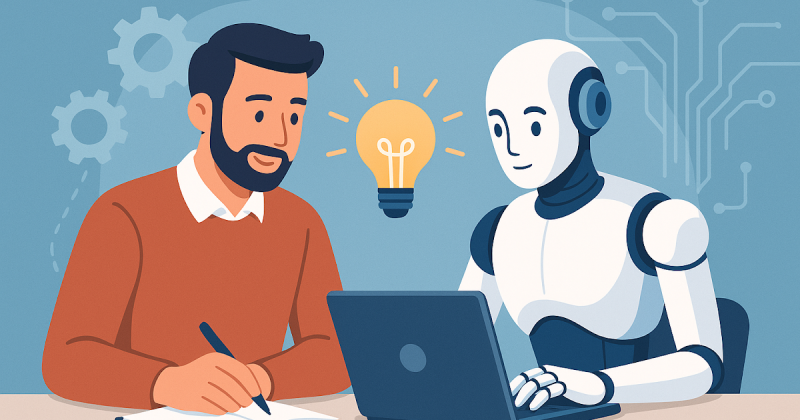
There’s a growing narrative that AI will replace developers, but in practice, that’s not what’s happening. What AI is really doing is changing how software—especially SaaS products—is built. It’s shifting the focus away from repetitive execution and toward something far more valuable: thinking, system design, and decision-making.
A large part of development used to involve repetition. Writing boilerplate, structuring similar features, and handling predictable patterns consumed a significant amount of time. Today, tools like GitHub Copilot reduce much of that overhead. You can move faster, prototype quicker, and avoid getting slowed down by tasks that don’t directly improve the product.
This creates a fundamental shift:
- The bottleneck is no longer writing code
- The bottleneck is thinking clearly about what to build
Real-World Impact (From Experience)
As a solo engineer working on a real estate ERP system, this shift was very clear.
AI-assisted development allowed me to:
- stay focused on the system design instead of repetitive implementation
- maintain momentum across modules
- reduce context switching during development
Because of this, I was able to:
- complete the handover operations module in ~6 weeks
- build the finance module in another ~3 weeks
Today, the system is actively used in the company’s daily workflow—handling real operational processes.
Without AI, the same timeline would have likely been longer due to:
- repeated coding patterns
- slower iteration cycles
- more time spent on low-level implementation
Faster Execution Changes the Game
For SaaS builders, speed is not just about coding faster—it’s about learning faster.
AI improves the iteration loop:
- ideas → implementation → feedback → refinement
Instead of spending days building a feature, you can:
- prototype quickly
- validate with real use cases
- iterate without heavy delays
Over time, this compounds into a major advantage.
What Actually Matters Now
As execution becomes easier, the differentiator shifts.
It’s no longer about:
- how fast you can code
- how much syntax you know
It’s about:
- designing systems that make sense
- structuring workflows that users actually follow
- making decisions that scale over time
- understanding how different parts of a system interact
AI can generate code, but it cannot decide:
- what problems are worth solving
- how a system should behave in edge cases
- what trade-offs are acceptable
That responsibility still belongs to the developer.
Maintaining Momentum and Reducing Burnout
One of the most practical benefits of AI is how it affects day-to-day workflow.
It reduces friction by removing:
- repetitive boilerplate work
- unnecessary context switching
- low-value implementation tasks
This leads to:
- more consistent progress
- longer periods of focused work
- less mental fatigue
SaaS products are not built in bursts—they are built through steady, continuous progress. AI helps maintain that consistency.
The Trade-Off: Speed Without Understanding Is Risky
There is, however, a real downside.
AI allows you to move faster—but speed amplifies mistakes.
If you don’t fully understand:
- your system architecture
- how data flows through your application
- how components interact
- how decisions affect scalability
You risk building:
- fragile systems
- inconsistent logic
- features that break under real usage
AI does not prevent bad decisions.
It accelerates them.
The New Role of a SaaS Engineer
Because of this shift, the role of a developer is evolving.
From:
writing code
To:
designing and operating systems
This includes:
- structuring multi-tenant applications
- designing reliable workflows
- managing data consistency
- aligning technical decisions with business needs
The technical layer is still important—but it’s no longer the only layer that matters.
Final Thoughts
AI is not replacing developers. It’s raising the bar.
It rewards developers who:
- think clearly
- understand systems deeply
- focus on meaningful problems
And it exposes those who rely only on implementation without understanding the bigger picture.
Used properly, AI becomes leverage. It allows you to build faster, stay creative, and focus on what actually matters—while still requiring you to know exactly what you’re doing.
For SaaS builders and engineers, that’s not a threat.
It’s an advantage.